Invasive vegetation presents a constant challenge to the Conservancy’s mission to sustain a diverse native habitat in its Nature Preserves. Often mechanical and chemical treatments are the only option. Our successful volunteer Vine Day program to control woody vines like Grape and Bittersweet is one example, and the work with our professional partners at Weeds Inc. on Phragmites control is another. Occasionally, though, we can enlist a natural partner.
One particularly troublesome weedy invader is Polygonum perfoliatum. Its common names - Mile-a-Minute and Asiatic tearthumb – vividly describe both its rate of growth and also what you experience when you try to pull up the shallow roots! Mile-a-Minute (“MAM”) is a native of eastern Asia and has become established in the mid-Atlantic U.S. It is an annual, herbaceous, vine-like herb, that can grow up to 10 feet long. A single plant can produce thousands of characteristic blue seeds that may persist in the soil for many years.

A plant close up showing the characteristic triangular leaves, a ripening cluster of seeds and the prickled stems.
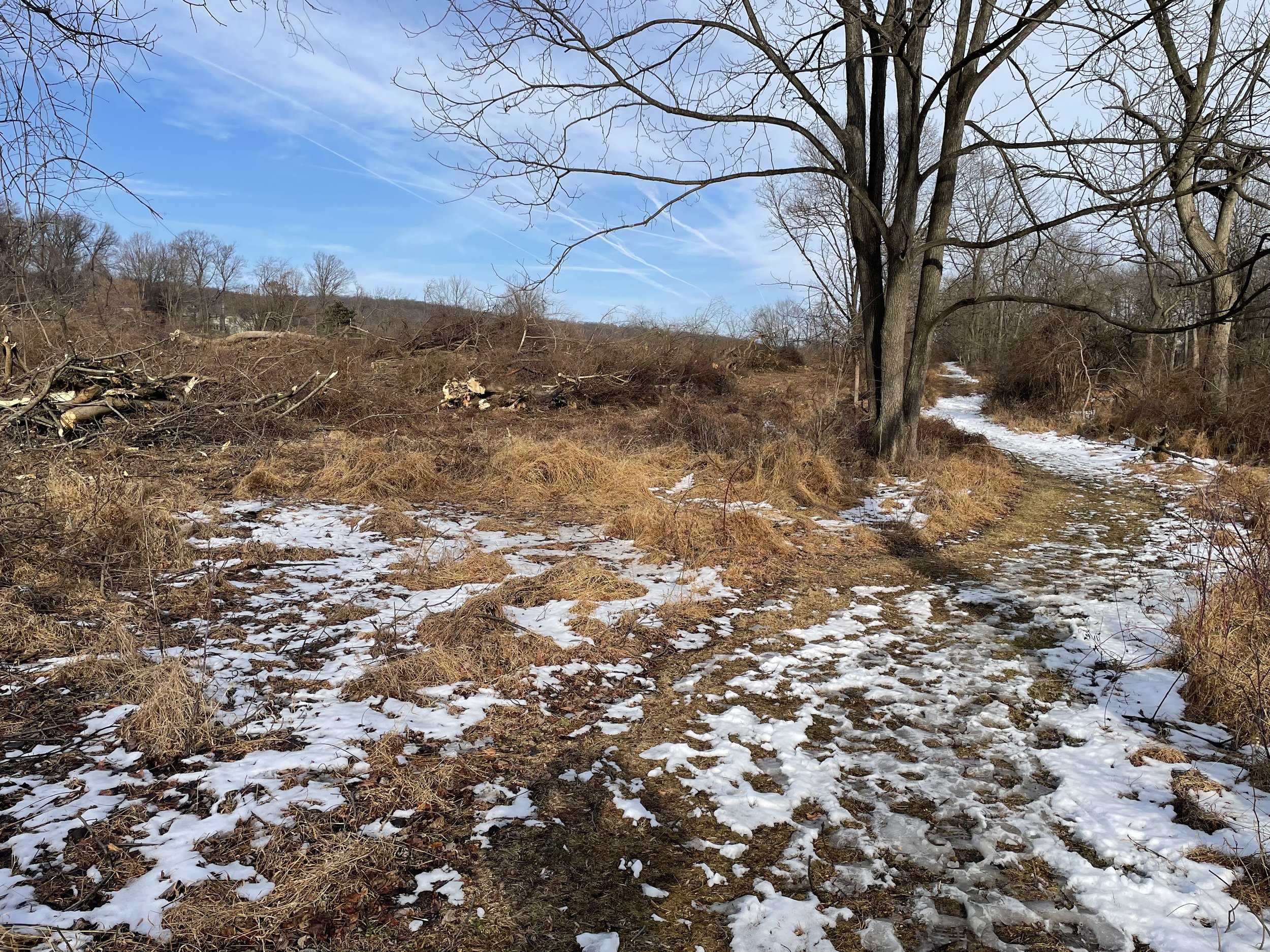
The plant’s long stems climb or recline on other plants and smother them, and the prolific seeds can lead to rapid spread. Which creates a particular problem for areas where we are trying to establish young native trees and shrubs, such as in the George Lorimer Preserve. Last year we noticed a MAM eruption along the fence of the new exclosure, possibly triggered by the earth-moving bringing dormant seed to the surface. The newly planted flowers, shrubs and trees risked being overwhelmed - something had to be done!
Fortunately we knew who to call! Back in 2008, the Conservancy was part of research conducted by Ellen Lake, a PhD student at the Department of Entomology and Wildlife Ecology at the University of Delaware. The project studied the effect of a weevil, Rhinoncomimus latipes, native to Asia, on MAM populations. This insect depends on MAM for its entire lifecycle: eggs are laid in the stem, the larvae feed in the stem, the pupae drop to the soil where they hatch into adults that then climb up to feed on the leaves, and start the cycle over. Three to four overlapping generations can occur during a growing season. Our involvement was to provide plots in the Valley Creek Preserve so that the impact of the weevil on growth of plants such as Goldenrod and Elm trees could be measured.
Although results from our portion of the research were not clear (but we gained Elm trees now replanted in many Preserves!), it was established from all the research that the weevils are highly host-specific, they delay seed production, reduce seed size; and cause plant mortality. Large numbers were shown to develop at some field sites, with reduction in MAM % cover and seed production. There is no indication that the weevil impacts any other plant.
Not only did the Conservancy gain the elm trees, we also distributed weevils in the valley Preserves, and they have been doing a great job – albeit only according to our subjective analysis. It is now difficult to find areas where MAM is dominant. However, to address the risk to the Lorimer site, we decided to give the local weevil population a boost by purchasing some more from the New Jersey Department of Agriculture Phillip Alampi Beneficial Insect Rearing Laboratory in Trenton, New Jersey.
The insects arrived in custom shipping containers in mid-June, and a cadre of Conservancy Board members set out to deploy them.
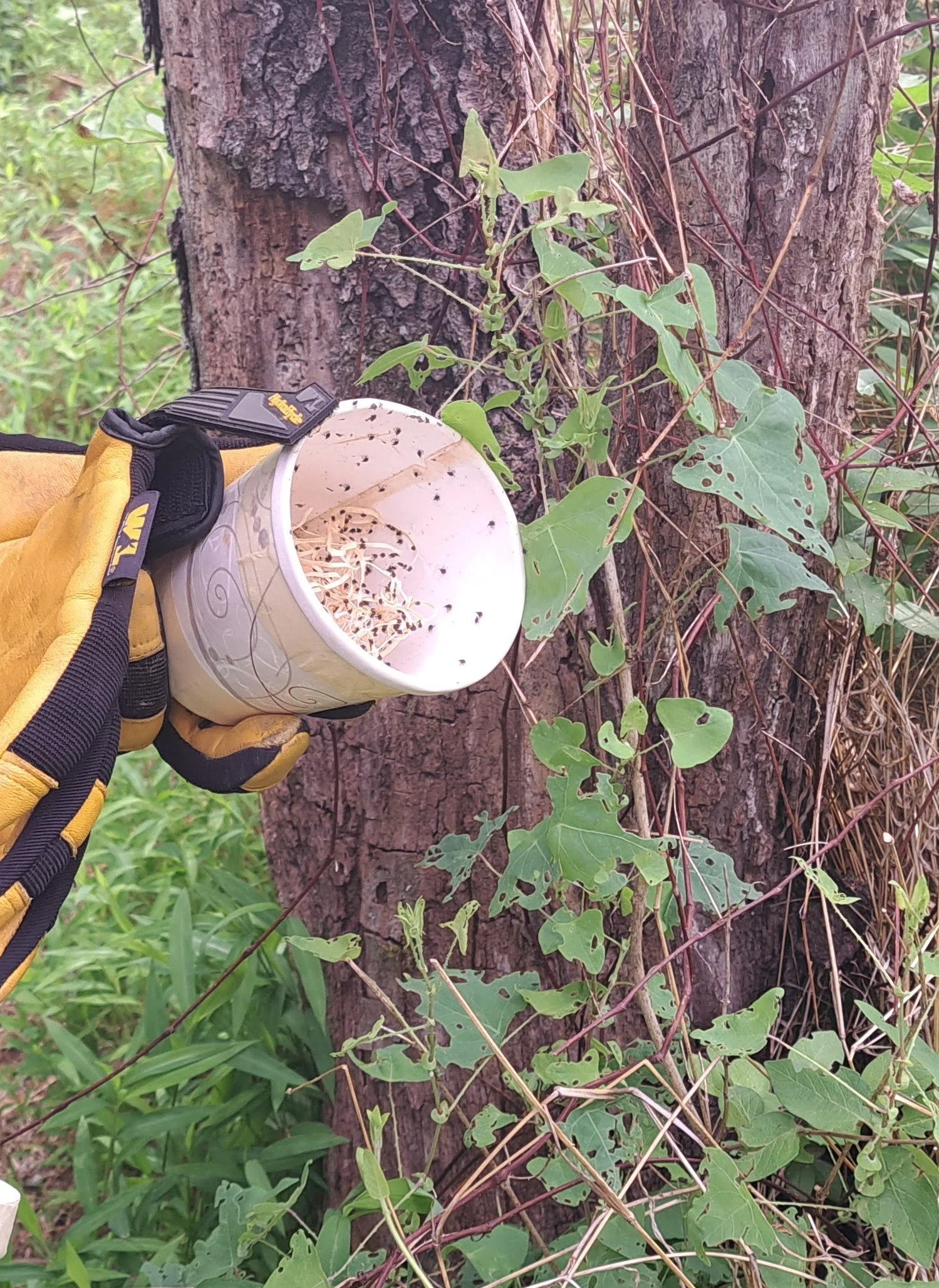
The weevils are shipped in cups modified to keep them moist and fed for a couple of days. Here they are being released onto a Mile-a-Minute plant beginning its climb up a supporting tree.
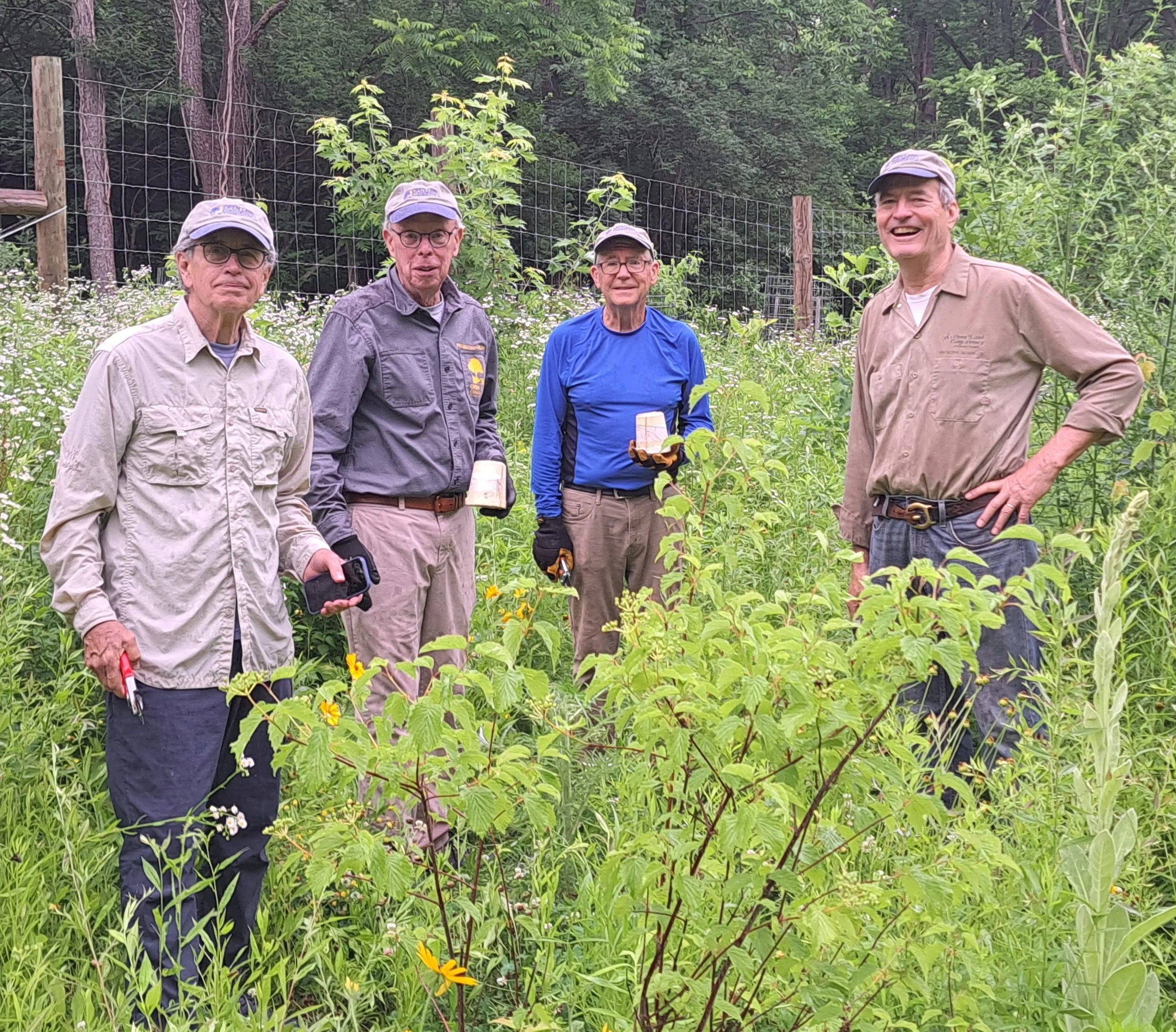
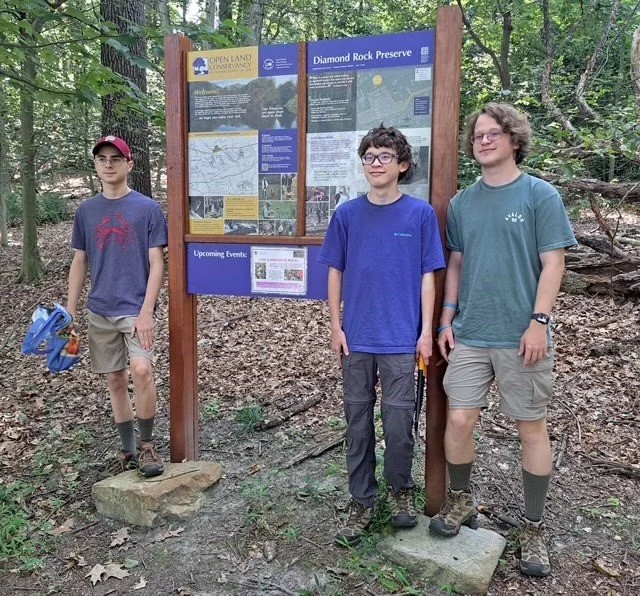
Here inside the Lorimer deer exclosure, surrounded by the burgeoning wildflowers, shrubs and trees, with the precious weevil cargo, are OLC Board members Mike Burg, Mac Wilson, Greg Sprissler and Tim Magee
As you walk the Preserves, take the opportunity to look for Mile-a-Minute, and signs of our tiny control agent – perhaps most visible via the holes it makes in the plant leaves. If you have gloves, reach down to the base of the plant and see how easily it pulls out of the ground. Any weevils will quickly find another home, and you’ll be making life easier for our Blackgums, Oaks, Maples, Dogwoods, Viburnums, Asters, and Sneezeweed, amongst many other newly planted species!